
The short answer
Shopify's native quantity rules, available on Shopify Plus and tied to B2B catalogs and price lists, cover a narrow slice of what Prime MOQ does, and only for B2B storefronts.
Prime MOQ works on any plan, applies to both retail and B2B checkouts, and covers quantity, value and weight-based limits plus repurchase caps, rather than only a minimum, maximum and increment on quantity.
Where they overlap
Both can enforce a minimum, a maximum, and a step increment on quantity for a product.
Where Prime MOQ goes further
Capability | Shopify native quantity rules | Prime MOQ |
|---|---|---|
Available on standard, non-Plus plans | No | Yes |
Applies to regular retail checkout, not just B2B | No | Yes |
Value-based cart total limits | No | Yes |
Weight-based limits | No | Yes |
Repurchase caps across separate orders | No | Yes |
Per-language, customisable message text | No, generic Shopify UI | Yes |
Scope by tag, vendor, product type, price range or metafield | Limited | Yes |
Custom styling of the limit message | No | Yes |
When you might use both
If you are on Shopify Plus with a B2B catalog, native quantity rules are a reasonable baseline for pure per-product quantity increments tied to a specific B2B price list.
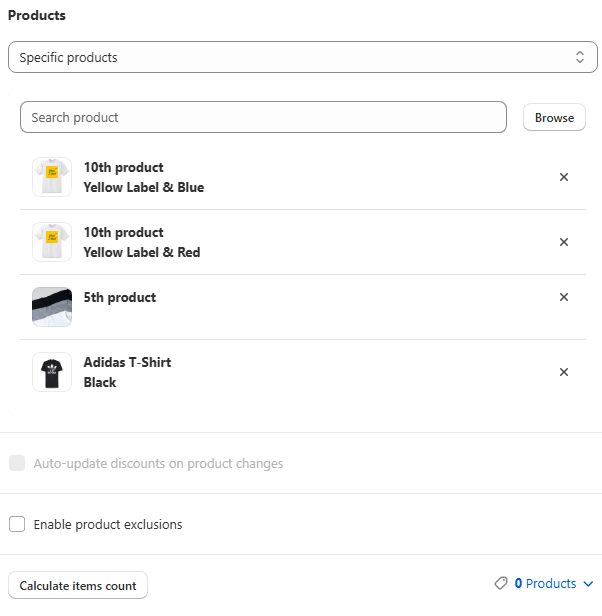
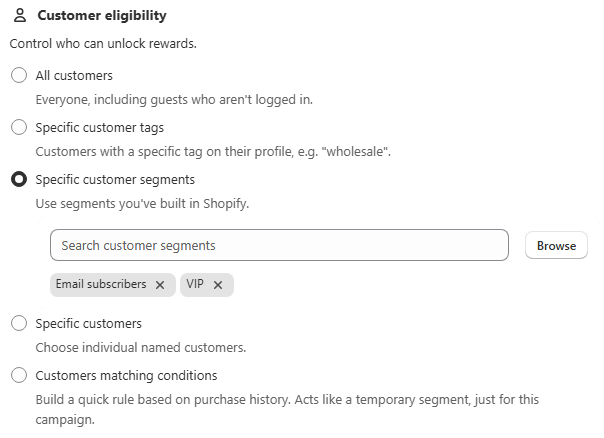
Prime MOQ is the better fit whenever you need value or weight-based limits, repurchase enforcement, custom messaging and styling, or simply want the same rule logic applied uniformly across retail and B2B checkouts instead of maintaining two separate systems.