
Prime MOQ

Live Preview, Check a Rule Before You Publish

The Preview card simulates a shopper on a sample product page, updating instantly as you edit conditions and message text, with no backend calls.

Prime MOQ Team

Prime MOQ Team

Updated · 3 min read

Short answer

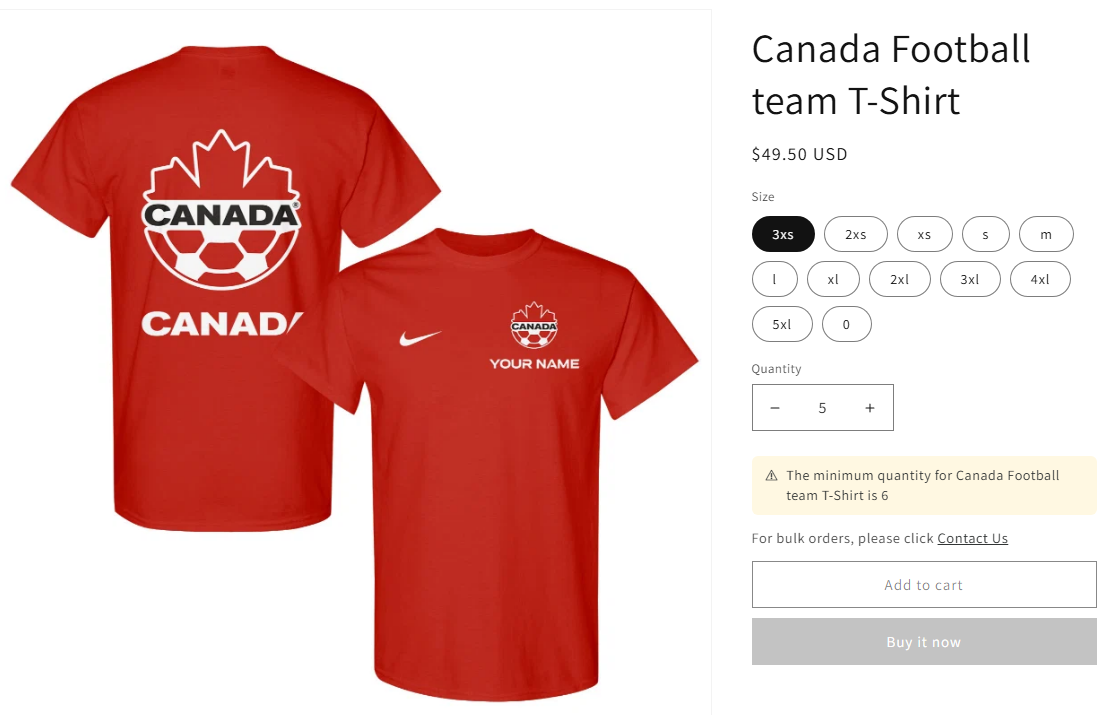
Every rule editor has a Preview card in the right-hand column that simulates a sample product page. Adjust the quantity stepper and it shows the exact warning message at that quantity, disables Add to cart when the quantity would be blocked, and summarises your scope and eligibility in plain language.

  • The preview is client side, so it updates with zero delay as you type.
  • The Applies to line summarises scope, eligibility and countries in one sentence.
  • A separate Summary card below it is a read-only, plain-text readout of the whole rule.
  • It cannot simulate repurchase limits, actual checkout blocking, or Design page styling.
  • Always do one live storefront test after saving, whatever the preview shows.

What it shows

Every rule editor includes a Preview card in the right-hand column: a live, client-side simulation of how the rule behaves on a sample product page, updating instantly as you change conditions, messages or scope settings. It makes no backend calls, so there is no delay between editing a field and seeing the result.

  • A sample product with a price and a weight, and a quantity stepper you can adjust

  • The Applies to line, summarising your current scope, eligibility and country restrictions in plain language, for example "Collections (3), Wholesale customers, 2 countries"

  • The exact warning message that would show at the quantity you set, using your current conditions and message text

  • A disabled Add to cart button whenever the simulated quantity would be blocked, mirroring what a real shopper experiences
  • product
    product

The Summary card is a second, plain-text readout

Directly below the Preview card sits a Summary card: a condensed, always-visible, plain-text version of the same rule, for a quick glance without stepping through the quantity simulator. It shows, in order:

Line

What it reads

Name

The rule's name, or "New rule" until you name it

Type and scope

For example "Quantity limit / Collections"

Conditions

Your bounds as a single range, 6 ≤ Quantity ≤ 12, or Quantity ≥ 6 and Quantity ≤ 12 when only one bound is set, plus "Multiples of N" if set

Eligibility and schedule

For example "Wholesale customers / Aug 10, 2026 to Sep 1, 2026"

Enforcement

"Enforced in cart and checkout." or "Currently paused."

Value ranges carry the currency symbol and weight ranges carry the unit, so a weight rule reads 100lb ≤ Weight ≤ 500lb rather than bare numbers.

Unlike the Preview card, the Summary card has nothing to interact with. It is read-only, it always reflects your current unsaved edits, and it does not change with Design page styling, since it is plain text inside the rule editor rather than the storefront message itself.

Use it while building a rule

Set your conditions first. Fill in the Conditions card, limit type and the minimum, maximum or multiple. The preview reacts immediately.

Adjust the quantity stepper. Use the minus and plus buttons, or type into the quantity field, to step through values above, at, and below your thresholds.

Confirm the message reads correctly. Watch the warning text that appears once a blocked quantity is reached. It is the same text, and the same language, you set in the Messages card, so it is the fastest way to proofread wording before it ever reaches a shopper.

Check the Applies to summary. Glance at that line to confirm your scope and eligibility match what you intended, without leaving the page.

Read the Summary card last. It is the fastest final check that the rule as a whole says what you meant, in particular that the condition range reads the way you expect and that the last line says the rule will actually be enforced.

What it does not simulate

  • Repurchase limits. These depend on real order history, so test them with a real test account and real prior orders.

  • Actual checkout blocking. The preview shows what would happen. The real enforcement is the Shopify Function at checkout, so always do one live storefront test after saving.

  • Design page styling. The preview reflects your rule's text and logic, not the colours and fonts. Check the Design page's own preview for those.

Frequently asked questions

Does the preview call my store or the backend?

No. It is a client-side simulation, which is why it updates with no delay as you type and why it cannot see anything that lives in your store's data, such as a customer's order history.

Why does the preview not reflect my Design page colours?

They are separate previews on purpose. The rule preview is about wording and logic, the Design page preview is about appearance. Check both.

Can I preview a repurchase limit?

No. Repurchase depends on a customer's real order history, which the preview has no access to. Test it with a dedicated test account and real prior orders.

Is the preview product one of my real products?

No, it is a sample with a price and a weight so the value and weight limit types have something to multiply against the quantity stepper.

If the preview looks right, do I still need to test on the storefront?

Yes. The preview confirms the message and the logic. Only a real checkout attempt confirms the Shopify Function is blocking the order, which is the part that actually matters.

What is the difference between the Preview card and the Summary card?

Preview simulates a shopper adjusting quantity on a sample product page and shows the exact message they would see. Summary is a condensed plain-text readout of the whole rule, its name, type, scope, condition range, eligibility, schedule and enforcement status, for a quick glance without interacting with anything. They sit above and below each other in the sidebar and update together as you edit.

What does the Applies to line include?

Your product scope, customer eligibility and country restrictions, condensed into one plain-language sentence, so you can sanity-check all three without scrolling back up the form.

Best for: Proofreading a rule's wording and sanity-checking its scope before it ever reaches a shopper.

Applies to: Quantity, Value and Weight limit types

Did this answer your question?

Related articles

Still stuck?

Tell us what you are trying to set up and we will reply within 24 hours.

Contact support

We use one cookie to remember this choice, and Google Analytics only if you say yes. Nothing analytics related loads until you do. Read the cookie policy.